



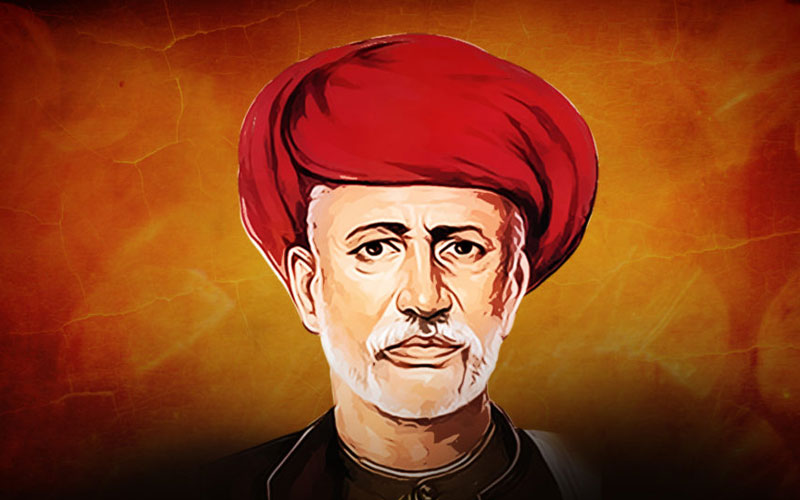
Jotirao Phule: Shetkaryaca Asud: Translation
₹ 00.00/- FREE
MAHATMA JYOTIRAO GOVINDRAO PHULE
by: Shetkaryaca Asud
translated by Gail Omvedt and Bharat Patankar
A brief introduction to Phule:
Jotirao Phule (1827-1890) is considered a founder not only of the anti-caste movement; in Maharashtra also he is looked upon as a of the farmers’ movement, the women’s movement, and a bahujan-oriented environmental movement. He was born in a Mali (gardener jati) community of Maharashtra, and educated first in his village, then in Pune, a city which had been formerly the capital of the Brahman-dominated independent regime, but which was at that time the centre of cultural and political stirrings. He quickly became disillusioned with the Brahman leadership of the nationalist movement, and instead embarked on a career as social reformer intending to awaken the “Shudras and Ati-Shudras” to their slavery and their destiny. His initial efforts involved starting schools for untouchables and girls. Then in 1875 he founded the Satyashodhak Samaj or “Truth-Seekers” society, his answer to the various Prarthana and Brahmo Samajes which he continuously mocked. Its purpose was to encourage the education of both boys and girls, fight priestly domination, especially by organising social-religious ceremonies without them. This gained some influence in Bombay and in Pune district, and he collected around him a group of young radicals, mainly Malis in the city, but Maratha-Kunbis from the rural areas. In 1881 his major critique of the joint exploitation of the Shudra and Ati-Shudra peasantry by the British and Brahman alliance in the bureaucracy, Shetkaryaca Asud (“The Whipcord of the Cultivators”) was published.
This is one of three short books (the others are Gulamgiri, or “Slavery”; and Sarvajanik Satya Dharm Pustak, or the “Book of the Universal Religion of Truth” – the translation of titles is Phule’s own). He also wrote poetry, numerous tracts, and small plays. I have began with Shetkaryaca Asud because it is the most comprehensive of Phule’s work: it gives an account of the extortion by Brahmans in religious festivals throughout the year; of the Aryan defeat of the indigenous inhabitants (Phule was perhaps the first to turn the “Aryan theory” upside down and use it to explain Brahmanic control; though we should note that Ambedkar disagreed with him), then of the exploitation of “Shudra and Ati-Shudra farmers” by the British and Brahman bureaucracy, then a minute description of the living standards of his farmers; then his own suggestions along with a condemnation of the swadeshi movement which was beginning at that time.