Life and Mission
- Home
- Life and Mission




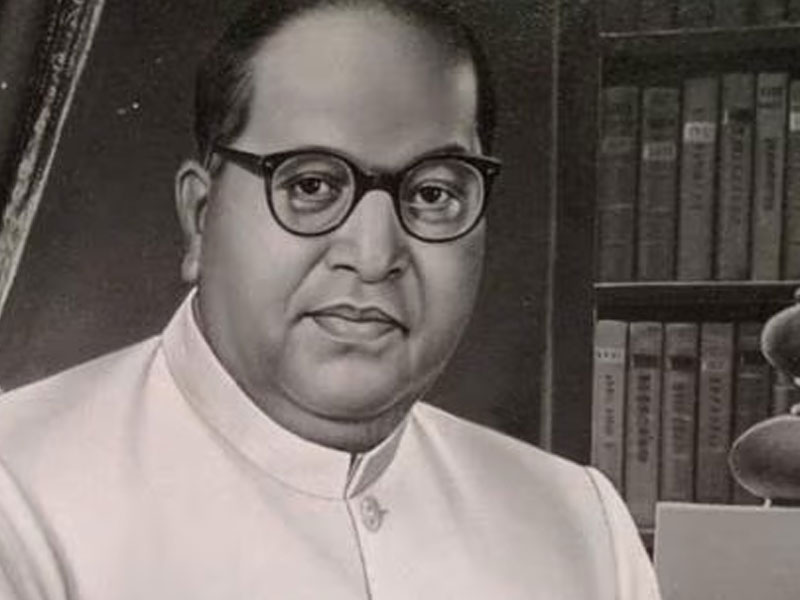
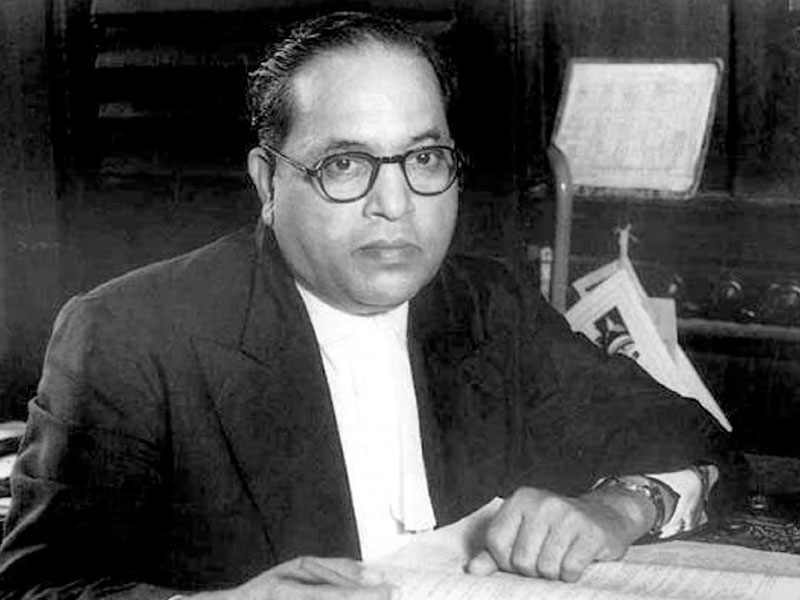
Dr. Babasaheb Ambedkar was a veritable phenomenon of the 20th century. There may scarcely be a parallel indeed in the annals of human history to the saga of struggle that his life represented. Born in the family of ‘untouchables’, he could nonetheless scale the highest peak of scholarship, leadership and statesmanship. When the Hindu caste system had ordained severe punishment for his community for so much as thirsting for education and knowledge, he had secured the highest academic honors from the most prestigious universities of the world and thus conclusively refuted the basic premise of intrinsic inferiority or superiority based on one’s birth proffered by the caste system. For over two millennia, the Hindu caste system had perfected itself into a self-sustaining mechanism of exploitation that fossilised all the social relationship into a caste cauldron and in process had completely robbed the labouring masses like untouchables of their human identity. He had reclaimed for them this identity, breathed political consciousness and galvanised them into a vibrant movement that changed the course of Indian politics. In the epic battle against the vile and complex caste system, he had single-handedly performed the roles of a researcher, a theoretician, an organizer, a journalist, a politician, a leader etc. against all possible odds and still come out with outstanding results. He was among few who dared the contemporary might of the then Indian National Congress and Mahatma Gandhi and stood his grounds even in the face of threats to his life. At symbolical plane, Manu who was the evil enemy in this epic battle as the code giver for the caste system, had to concede defeat and make place for Ambedkar code in the form of the Constitution of India. Eventually, he enacted the biggest religious conversion in the history that ensconced him with his western attire at the place alongside Buddha as the spiritual deity for his people.
During his lifetime Dr. Ambedkar had consistently faced despise, ignominy and insults at the hand of caste establishment. Even after his death, despite his outstanding statesmanship and sterling contributions like drafting the Constitution of India, Ambedkar continued to be despised and ignored by the ungrateful mainstream till the emerging imperatives of electoral politics needed him. Before that, the mainstream even did not concede him so much as leadership of all the untouchables and preferred to belittle him by projecting as a leader of his own community. It systematically either blacked him out from the recorded history or allowed him place in its margins. It strove to confine him to a small community of Maharashtra in which he was born. So effective was this establishment cunning that barring a few pockets outside Maharashtra, where the movement had penetrated in his lifetime, he remained a stranger for a long time to the very people for whom he lived and died. His published writings were all out of print and were available only in a few reputed libraries. A vast unpublished material was embroiled in ownership disputes and hence was decomposing in the custody of courts of law. A few biographies of Ambedkar, among them notably one written by Dhanajay Keer in English (first published 1962) and the other written by Mr. B.C. Khairmode in multiple volumes in Marathi (first volume published in April 1952 and the last volume yet to come), that constituted the earliest source material on Ambedkar had significantly contributed to spread awareness and evoke curiosity about him. However, in absence of an easy access to his original writings he was not even known to the well-meaning intellectual community beyond certain heresies and anecdotes. It is only as a result of struggles of his people that claimed increasing space in contemporary politics and partly influenced by the intrinsic need to woo dalits that the State moved to undertake publication of his writings. The Government of Maharashtra undertook to publish his writings and speeches and came out with its first volume in April 1979. So far 16 volumes have been published which are being translated in Indian languages of some States. Before this project, it needs to be noted that many organisations and individuals claiming allegiance to Ambedkar-thought had brought out reprints of his published writings, compilation of his speeches scattered at many places, and secondary material in his eulogy. It certainly did contribute to spread awareness about the Ambedkar-thought, but due to their meagre resources its reach remained acutely constrained. This constraint was largely overcome when the Government of Maharashtra offered his writings and speeches in well-edited volumes at reasonable prices. Thanks to it, this publication, particularly the ones containing his hitherto unpublished writings, for the first time provided comprehensive introduction to the treatise of his thoughts and expectedly gave impetus to discussions and research work on Ambedkar-thought. The eruption of dalit militancy in the form of Dalit Panthers movement in 70s and the spate of anti-reservation flare ups in 80s, that shook the oppressors as well as oppressed, also significantly motivated the study of Ambedkar-thought.
As the development process picked up momentum in the post-independence period, the contradiction among the ruling classes started growing which in turn manifested into many political parties opening their shops in the electoral market of India. The heat of competition impelled them to see the importance of the vast market segment constituted by the dalit votes. The latter, being one-fourth of the total market, was significant enough even in any electoral constituency to tilt the scale. The broad strategic response possible was either to fragment this segment, which was easy to do along the existing sub-caste fissures, so as to reduce it to insignificance level or to consolidate it and lure it onto ones side. However, with the passage of time the trend of dalits transcending their sub-caste boundaries and getting emotionally bonded around Ambedkar was increasingly becoming visible. As such the former negative strategy became less attractive and was ostensibly adopted by only the hard-core fascist parties. The large-scale adoption of the latter positive strategy meant competition in claiming Ambedkar’s legacy that manifested in hijacking Ambedkar away to the camps of the ruling classes. This cooptation of Ambedkar by the mainstream politics essentially resulted in significant displacement of the genuine Ambedkar by the deformed Ambedkar in the gullible dalit masses. The universal eulogy reflected from the process of cooptation only helped latent tendency towards deification and iconisation of Ambedkar and that virtually made it impossible to review Ambedkar-thought as a living body in the context of changing times and circumstances without incurring the sin of sacrilege.
While the imperatives of electoral politics has changed the attitude of State to the extent of cooptation of Ambedkar, the civil society still reflects the casteist prejudice against him. The process of globalisation driven by the imperialist institutions like IMF and the World Bank since 1980s and which got formally adopted by the Government of India in 1991, in the crisis-ridden economic context unleashed new contradictions that manifested among other, the resurgence of the Hindu fundamentalism. These forces blatantly upheld everything that appeared conclusively condemned by liberal ethos during the post-independence decades. Ambedkar, as a symbol of these ethos naturally became the target for their vicious attack. Currently these attacks could be seen in the form of defilement of his statues and the pseudo-intellectual cunning represented by some reactionary individuals. Both, the cooptation as well as the vilification of Ambedkar are detrimental to the dalit interests. However, the former is much more injurious than the latter. While the latter represents open opposition to the ideology the former would mean adulteration of the ideology itself to suit the State interests. Unless, one is thorough about the ideological nuances and vigilant about its operative manifestations, it becomes extremely difficult to arrest or contain the damage done through the process of cooperation. The ideological weakness in turn incapacitates the struggle in the realm of the civil society and even its organizational apparatus. The present state of fragmentation of the Dalit movement may be largely attributable to this ideological weakness.